
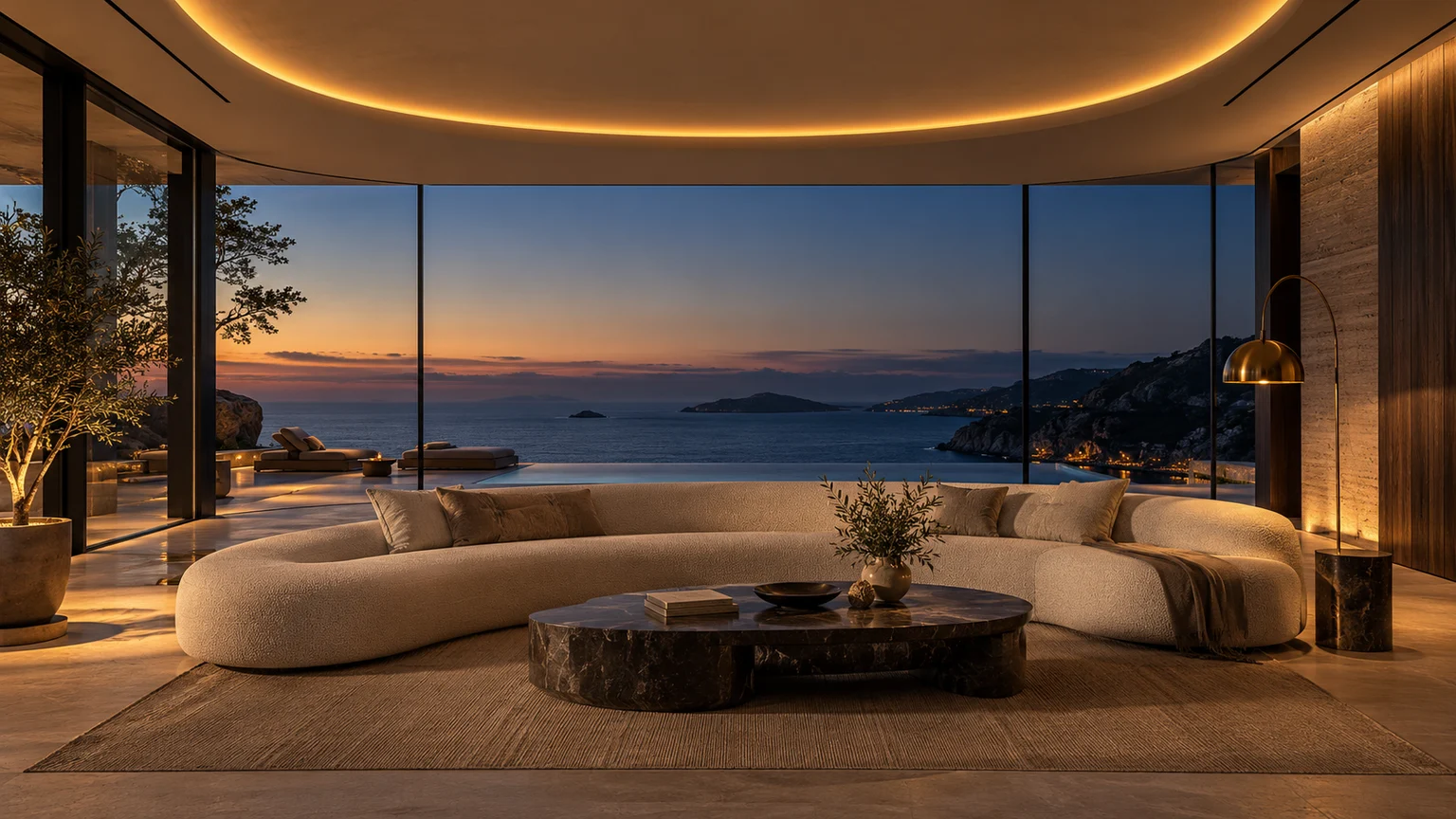
Start with the ordinary
Before collecting images, describe a typical day in the room. Who uses it? What needs to happen at the same time? Where do you pause, gather or work? These everyday details make a stronger starting point than a style label alone.
Choose a few anchors
Pick three qualities that matter most. Calm, tactile and generous might be enough. Use them to judge each decision: a material, a colour or a piece of furniture should help at least one of those qualities become tangible.
Turn references into decisions
An image is useful when you can say what you value in it. Is it the light, the proportions, the contrast or the softness? Write a short note beside each reference. That note is the bridge between inspiration and a brief someone else can understand.
Leave room for reality
A visual direction is a starting point. Record the constraints you already know — room dimensions, a piece to keep, timing, budget — and make unknowns explicit. A good brief invites the right questions.